
GPU service with measurements and stability tests.
Some graphics-card faults only appear during gaming or another demanding workload. We examine the symptom, thermal behaviour, power rails and the response of the GPU and memory.
The purpose of diagnosis is to separate cooling or power problems from memory, circuit or processor faults. You are then informed whether a technically sensible repair is available.
Common faults we handle
- No display or no device detection
- Artifacts, lines or distorted colours
- Crashes during games or applications
- High temperatures and fan noise
- Black screen after the driver loads
- Memory errors or unstable operation
Technical inspection
What GPU diagnosis includes
We perform a visual board inspection, short-circuit checks and measurements on the main power rails. Where possible, functional and load tests follow to identify the affected section.
Work considered after diagnosis
- Power-rail and short-circuit diagnosis
- Cooling-system cleaning and restoration
- Thermal-material replacement where required
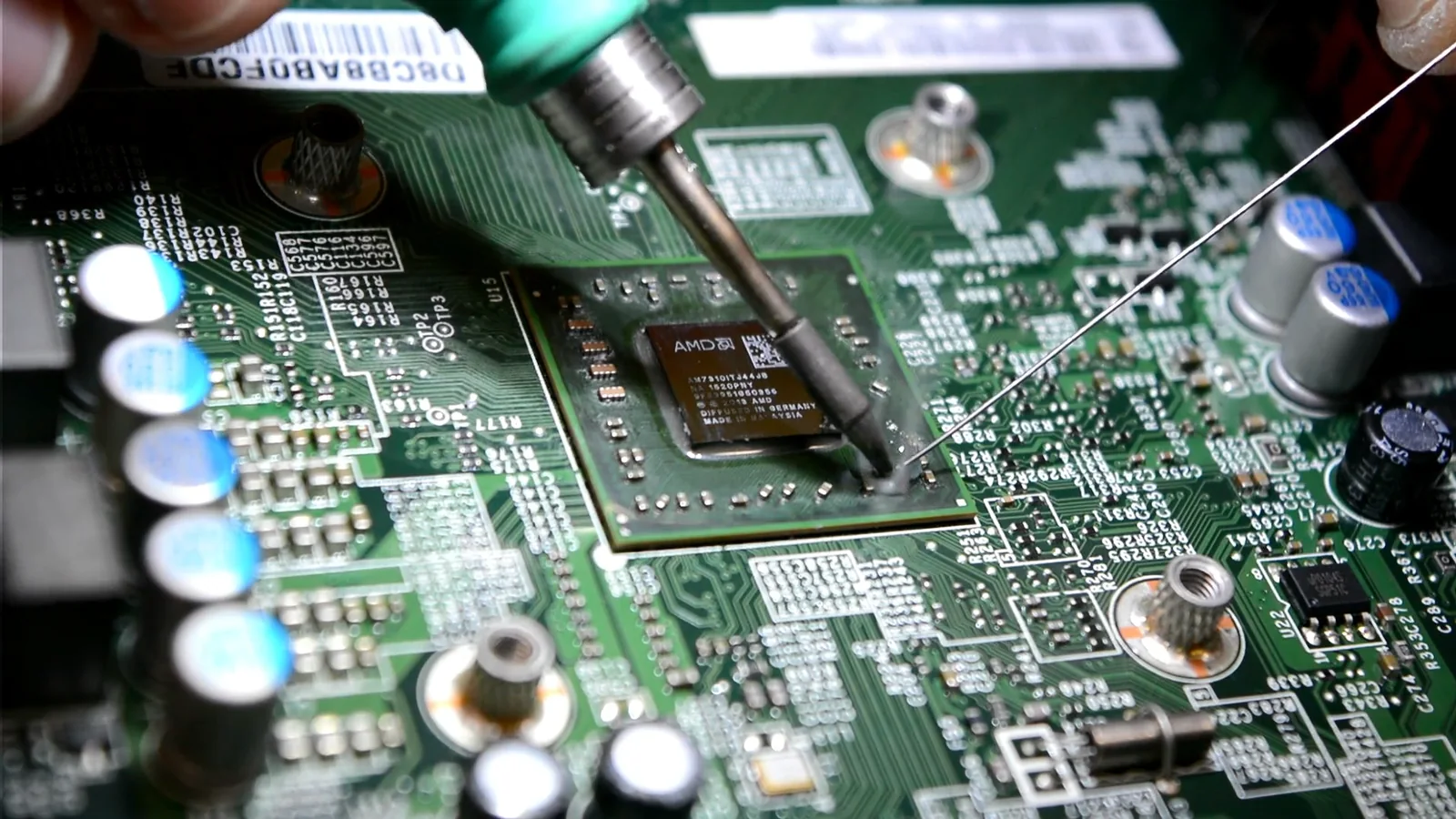
- Repair of individual electronic components
- Memory and load-behaviour testing
- Final stability testing after repair
Our process
From intake to final testing.
- IntakeWe record the symptom and relevant device history.
- DiagnosisWe inspect the cause at our workshop.
- ApprovalWe explain the solution, cost and estimated time.
- RepairAfter approval, we complete the work and final tests.
Useful answers
Frequently asked questions
Can every graphics card be repaired?
No. Repairability depends on the fault, part availability and the economic value of the repair. Diagnosis provides the answer.
Do artifacts always mean faulty memory?
Not necessarily. Temperature, power, drivers, memory or the GPU itself may be responsible, so testing is required.
Is replacing thermal paste enough?
Only when poor thermal maintenance is the cause. Electrical or memory faults require a different repair approach.